
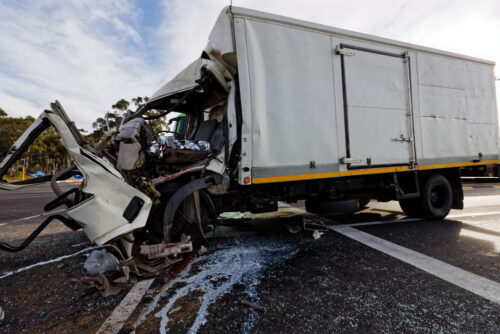
After a truck accident, the truth is not always obvious. Large trucking companies and their insurers often begin building their defense immediately, sometimes before you have had time to process what happened. Key details can be overlooked, and important records may not be preserved unless someone acts quickly.
The strength of your claim often depends on the information collected in the hours, days, and weeks following the crash. Evidence in a Georgia truck accident case can determine who is at fault, evaluate the severity of injuries, and whether you can receive compensation. Knowing what to look for and how to protect it can make a meaningful difference in how your claim is handled.
Types of Evidence That Can Strengthen a Truck Accident Claim
If you are wondering how to prove fault in a truck accident, many different types of evidence can help prove your case. A strong claim uses evidence from multiple sources. Each type of information adds context and helps create a more complete understanding of the crash.
Police Reports and Official Findings
Law enforcement officers typically document serious collisions and prepare a report. This report may include statements from drivers, witness observations, and details about the scene.
Officers may also note traffic violations or issue citations. While the report does not determine liability on its own, it can provide an early framework for understanding the incident.
Photographs and Video Footage
Visual evidence can capture conditions at the scene before they change. Photographs may show vehicle damage, debris patterns, road markings, and traffic signals.
Video footage may provide even more detail. Nearby businesses or traffic cameras sometimes record the moments leading up to a collision. These recordings can help clarify how events unfolded.
Witness Accounts
Witnesses can provide perspectives that are separate from those directly involved in the crash. Their observations may help confirm details such as speed, positioning, or driver behavior.
Obtaining contact information early can make it easier to follow up and preserve accurate statements.
Medical Documentation
Medical records help connect injuries to the accident. These documents show diagnoses, treatment plans, and the progression of recovery.
Consistent care may also demonstrate that the injuries required attention. This information can support both the existence and extent of damages.
Driver Logs and Trucking Records
Federal regulations require trucking companies to maintain detailed records. Driver logs and trucking records can reveal whether the driver and the trucking company followed safety rules.
These records may include:
- Hours-of-service logs showing driving time,
- Maintenance records for the vehicle, and
- Inspection reports documenting condition and repairs.
Reviewing driver logs and trucking records can help identify whether fatigue or mechanical issues contributed to the crash. This type of information may also show whether regulations were followed or violated.
Black Box Evidence
Commercial trucks often contain event data recorders. Black box evidence can provide detailed information about how the vehicle was operating before the collision.
This data may include speed, braking activity, and throttle position. Black box evidence can help reconstruct the sequence of events and provide objective details about the truck’s operation. Because this data may not be stored indefinitely, acting promptly may be important to preserve it.
Employment and Safety History
Trucking companies are responsible for hiring qualified drivers and maintaining safe operations. Employment records may reveal prior violations, insufficient training, or a history of unsafe behavior.
Safety records can also show whether the company followed proper procedures for driver monitoring and vehicle maintenance.
Expert Evaluation
In some cases, professionals may analyze the available information. Accident reconstruction specialists can review physical evidence and explain how a crash occurred.
Medical experts may also provide insight into injuries and long-term effects. Their analysis can help clarify complex issues.
Why Evidence Plays a Key Role in Truck Accident Claims
Evidence supports each part of a personal injury claim. Without it, proving fault or showing the extent of injuries can become more difficult.
In these cases, evidence may help:
- Explain how the collision occurred,
- Identify responsible parties,
- Demonstrate the severity of injuries, and
- Support the overall value of the claim.
Because trucking companies often control critical records, taking steps to preserve information is important.
How to Preserve Evidence After a Truck Accident
Important details can be lost if action is delayed. Taking steps early can help protect information that may support your claim.
After an accident, consider the following actions:
- Take photographs of the scene and vehicles,
- Take photographs of the numbers on the side of the cab, as well as the name of the trucking company,
- Collect witness contact information,
- Keep copies of medical records and expenses, and
- Limit communication with insurance representatives.
In some situations, legal counsel may request that the trucking company preserve relevant records. This step can help prevent important information from being lost.
How Evidence Helps Prove Fault in a Truck Accident
Establishing liability requires showing that another party acted negligently and that their actions caused the crash. Evidence plays a central role in this process.
To prove fault in a truck accident, multiple forms of information are often used together. Driver logs and trucking records may show whether safety rules were followed. Black box evidence may reveal how the vehicle was operated. Witness statements and physical evidence can support these findings.
No single piece of information usually tells the full story. A strong claim often depends on how different forms of evidence work together. Taking a comprehensive approach to evidence in a Georgia truck accident case can help ensure that you do not overlook important details.
Speak with a Georgia Truck Accident Attorney
Handling the aftermath of a truck accident can feel overwhelming, especially when you are trying to recover while also gathering information. Knowing what evidence is important and how to protect it is not always clear.
Evans Litigation & Trial Law, LLC works with individuals across Georgia to identify and preserve the evidence needed to support a claim. Our experience includes time spent representing insurance companies, which provides insight into how claims are evaluated and challenged.
Early action can help strengthen your position and protect your rights. Speaking with an attorney can provide clarity about your options and help you avoid steps that may affect your claim.
Evans Litigation & Trial Law, LLC
1447 Peachtree St NE Suite 540b
Atlanta, GA 30309
Contact Evans Litigation & Trial Law, LLC today to schedule a free and confidential consultation.
Frequently Asked Questions
What Evidence Is Most Important After a Truck Accident?
Key evidence often includes police reports, photographs, witness statements, and medical records. Additional materials, such as trucking company records, may also be important depending on the situation.
Can Black Box Data Be Used in a Truck Accident Case?
Yes. Black box evidence can provide detailed information about how the truck was operating before the crash. This information may help establish speed, braking activity, and other factors.
Do Trucking Companies Have to Keep Driver Logs and Maintenance Records?
Yes. Trucking companies are generally required to maintain driver logs and trucking records under federal regulations. These records can help determine whether the driver and company followed safety rules.
How Long Does Evidence Last After a Truck Accident?
Some evidence may disappear quickly, such as debris or road conditions. Other records may only be retained for a limited time. Acting promptly can help preserve important information.
Should I Take Photos and Get Witness Information After a Truck Accident?
Yes, if it is safe to do so. Photographs and witness information can provide valuable support for your claim and help establish what happened.
Legal References Used to Inform This Page
To ensure the accuracy and clarity of this page, we referenced official legal and other resources during the content development process:
- Federal Motor Carrier Safety Administration, Summary of Hours Regulations.
- Federal Motor Carrier Safety Administration, USDOT Registration.
- Recovery of damages for breach of legal duty, O.C.G.A. § 51-1-6 (2024).

Alfred L. Evans III, an Atlanta native and Hampden-Sydney College alum, is a seasoned personal injury lawyer with a unique background in insurance defense. Founding Evans Litigation and Trial Law in 2013, he specializes in wrongful death litigation, trucking litigation, and various vehicle accident cases. Recognized as a Super Lawyer and a “Rising Star” by Superlawyers, Alfred applies his in-depth knowledge of the insurance and trucking industries to maximize client recoveries.

 Loading...